

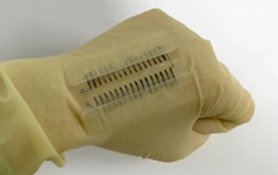

Materials that harvest heat and turn it into electricity could lead to more cost-effective devices.
Tsukuba, Japan – (ACN Newswire) – Scientists are getting closer to designing thermoelectric materials that efficiently harvest heat from the surrounding environment and convert it into electricity to power various devices and appliances, according to a review of the latest research in the journal Science and Technology of Advanced Materials. Devices made with these materials could avoid the need to recharge, change and dispose of batteries.
For thermoelectric materials to be efficient energy producers, they need to be able to hold heat and conduct electricity well. Thermoelectric materials that can work near room temperature and are flexible would be especially advantageous, particularly for use in wearable devices.
Three types of conducting materials are being investigated for use in thermoelectric devices: inorganic, organic and hybrid materials.
Inorganic thermoelectric materials efficiently convert heat into electricity, but are not very flexible. Researchers are working to overcome this hurdle. For example, a flexible thermoelectric device was fabricated using chromel (90% nickel and 10% chromium) and constantan (55% copper and 45% nickel) layers covered by a flexible sheet made of polyimide and copper. Micro-thermoelectric generators based on inorganic materials have potential applications in environmental and building monitoring, animal tracking, security and surveillance, and medical treatment. They have already been introduced into commercial devices, such as a body-heat-powered watch manufactured by Seiko.
Most organic thermoelectric devices involve polymers. Semiconducting polymers conduct electricity and hold heat better than conventional inorganic semiconductors. They are also lighter and less expensive. Unlike rigid inorganic materials, they are flexible and moldable and can be produced in any shape using 3D printers. However, they are less efficient at converting heat into electricity. Researchers are trying to improve the thermoelectric efficiency of polymers by tuning the composition, length and arrangement of their molecules, aiming to increase the electrical conductivity and crystallinity of the final material.
Research that aims to combine the advantages of organic and inorganic materials by blending them together is focused on finding optimal compositions and improving the mixing process. For example, embedding organic molecules into inorganic titanium disulfide crystals makes them flexible and reduces their thermal conductivity. This improves the overall thermoelectric performance.
The authors conclude that thermoelectric devices can potentially replace traditional batteries in many applications, but a lot of work on improving thermoelectric materials is required for achieving success in this direction.
For more information about the research, contact
Professor Xavier Crispin
Laboratory of Organic Electronics
Linkoping University
xavier.crispin@liu.se
About Science and Technology of Advanced Materials Journal
Open access journal, STAM publishes outstanding research articles across all Aspects of materials science, including functional and structural materials, theoretical analyses, and properties of materials.
For more information about STAM, please contact:
Mikiko Tanifuji
STAM Publishing Director
Tanifuji.Mikiko@nims.go.jp
Paper link:
https://doi.org/10.1080/14686996.2018.1530938
Press release distributed by ResearchSEA for Science and Technology of Advanced Materials.