

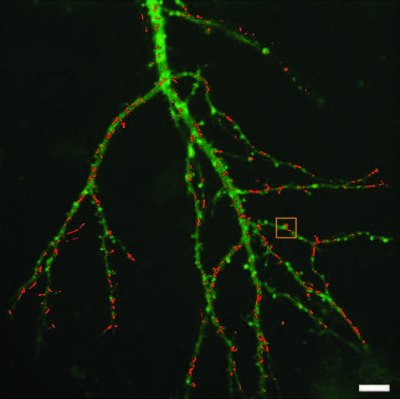


Luminescing nanosized crystals are showing promise for peering deeply into body tissues, but first they need to be made safe.
(ACN Newswire) – Investigations of ‘quantum dots’ for looking deeply into body tissues are rapidly evolving, but more work is required to ensure they are safe, according to a review published in the journal Science and Technology of Advanced Materials.
Quantum dots are tiny, nanometer-sized crystals that can be made from a variety of chemical elements and that can emit light in different colors according to their size. Research on their use for looking into the body and ‘seeing’ tissues, a variety of techniques collectively referred to as biological imaging, has been rapidly evolving since the 1990s.
Quantum dots that absorb and emit near-infrared light waves are allowing researchers to look deeper into tissues than ever before. This is because infrared light scatters less in the human body than other wavelengths, providing clearer images than conventional fluorescent imaging techniques.
Researchers at Japan’s National Institute for Materials Science reviewed the latest studies on near-infrared quantum dots. Studies have shown that they can be used for whole body imaging of animals, or to target specific tissues, such as tumors and lymph nodes.
Quantum dots have been made from a variety of elements and their compounds, including cadmium selenide (CdSe), mercury telluride (HgTe), lead selenide (PbSe), lead sulfide (PbS), indium arsenide (InAs), or simply from silicon (Si) or carbon (C), just to name a few.
Quantum dots using cadmium and lead are particularly toxic to cells and tissues; these metals also pose a risk to the environment. Some researchers have tried reducing toxicity by using a special non-toxic shell, but these protected quantum dots are not as effective for imaging as non-coated, non-toxic ones based on carbon, silicon or germanium. Silicon quantum dots in particular are promising because they are safe and very efficient at emitting light.
The review team argues that near-infrared quantum dots show promise for biological imaging once safety issues are addressed. More effective methods for their fabrication are also required to obtain higher efficiencies.
For further information, contact:
Shanmugavel Chinnathambi
International Center for Young Scientists
National Institute for Materials Science (NIMS)
Email: CHINNATHAMBI.Shanmugavel@nims.go.jp
Naoto Shirahata
International Center for Materials Nanoarchitectonics
National Institute for Materials Science (NIMS)
Email: SHIRAHATA.naoto@nims.go.jp
Press release distributed by ResearchSEA for Science and Technology of Advanced Materials.