


HONG KONG, July 10, 2026 – (ACN Newswire) – Driven by the industrial philosophy of “building houses like making cars,” China’s modular construction sector is accelerating its global expansion. A recent report by China CCTV Finance highlighted how Chinese modular buildings, with their efficiency and environmental advantages, continue to gain popularity overseas—with CIMC Group’s modular hotels and data centers serving as key case studies. Amid a global wave of industrialization in the construction market, this conglomerate, which started in container manufacturing, is now transforming “China-built” into a new industrial export business.
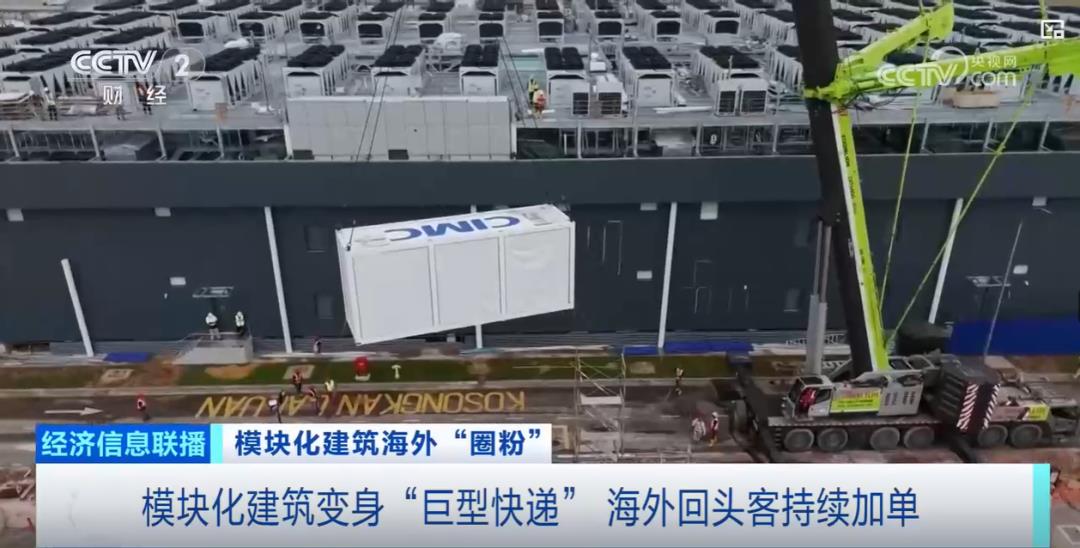
Data Confirms the Order Surge: Modular Building Exports Up Nearly 20%
Modular construction involves breaking buildings into independent modules, completing over 90% of structural, electrical, plumbing, and finishing work in factories, then shipping them to site for rapid assembly. According to Shenzhen Customs statistics, in the first four months of this year, the value of prefabricated buildings exported through Shenzhen port by Chinese enterprises reached RMB 1.68 billion, up 19.6% year-on-year, with products exporting to over 150 countries and regions.
This model is reshaping traditional construction timelines. Overseas project examples cited in the China CCTV report show that dozens of modules shipped from Chinese factories can be hoisted and assembled on-site within just weeks of arrival, with a fully functional building completed 60% faster than conventional methods. Market research forecasts the global modular construction market will surpass $142.8 billion by 2030.
CIMC in Practice: “Building Houses” with Standardized Industrial Manufacturing
Behind the rise of modular construction lies the successful extension of standardized industrial manufacturing principles into the building sector. As a pioneer in this field, CIMC Group has applied its expertise in container standardization and modular manufacturing to construction since 2004. Leveraging over 40 years of accumulated capabilities in standardization and modularization, CIMC has built a comprehensive, integrated service chain covering design, manufacturing, logistics, and installation.
Mr. Zhu Weidong, Managing Director of CIMC Modular Building & Investment Co., Ltd. (CIMC MBI), noted that the company’s practice has expanded from senior apartments and hotels exported overseas into the global data center construction boom. In early 2026, a CIMC modular senior apartment project for the UK departed from Dongguan’s Humen Port to central England—63 highly integrated modules were hoisted on-site in just two weeks. During the same period, CIMC’s first overseas modular office project—the Bastos District office building in Yaoundé, Cameroon—was also officially shipped. Constructed from 78 modular units manufactured to high standards in Chinese factories, the project is expected to be fully operational by the second half of 2026, with construction timelines shortened by more than 50% compared to traditional approaches.
Challenge and Opportunity: Entering the Data Center Growth Track
The China CCTV report paid special attention to modular data centers as a high-growth niche. Mr. You Deqiang, General Manager of Jiangmen CIMC Digital Energy Equipment Co., Ltd., noted that global demand for modular data center business has grown rapidly over the past two years, and the company has delivered modular prefabricated data center projects with a cumulative installed capacity exceeding 1,000 megawatts, spanning Malaysia, Indonesia, the Middle East, Italy, and other regions.
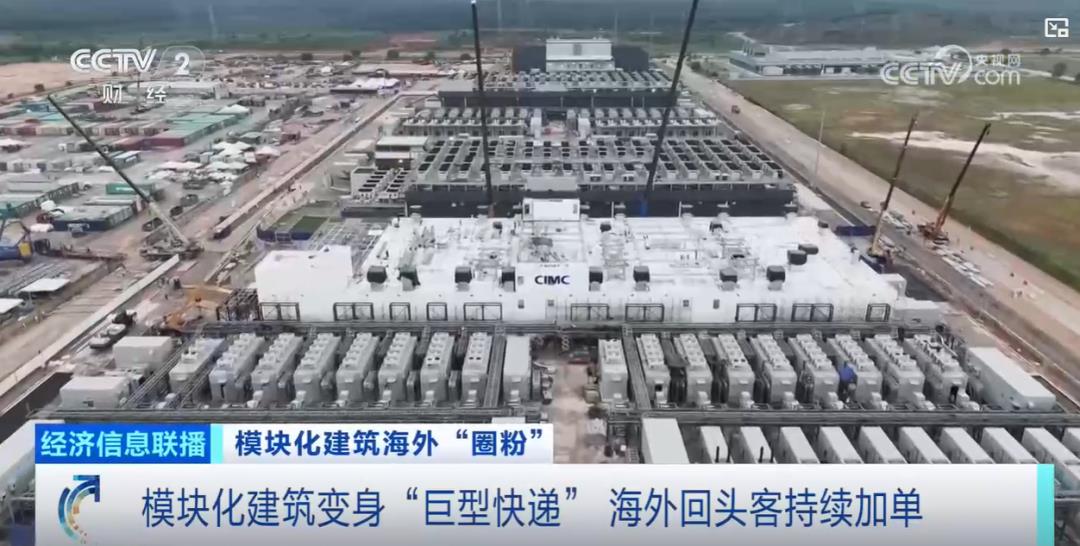
In the modular data center space, CIMC primarily offers integrated “out-of-the-box” solutions covering design, construction, shipping, and delivery for global computing power infrastructure. Its product portfolio focuses on fully prefabricated data hall integration, while also building system capabilities for core functional modules such as power distribution, pre-cooling, and diesel generators. To address surging market demand, in the first quarter of this year, CIMC Group completed organizational optimization and a strategic upgrade of this business segment, expanding manufacturing capacity from a single base to coordinated mass production across three major bases, significantly enhancing overall delivery capabilities. Currently, CIMC Digital Energy is actively exploring Southeast Asian markets, using Malaysia and Indonesia as hubs to radiate across the region.
The Official report has brought wider attention to a key insight: China’s construction “going global” relies not just on speed, but on a replicable set of industrialized capabilities. Looking ahead, CIMC Group will continue to deepen its presence in emerging sectors such as modular construction and digital infrastructure, delivering high-quality advanced solutions to global customers and driving a better world.