


Tests show an association between how aggressive a tumour is and the levels of sugar and inflammatory proteins in the blood.
Selangor, Malaysia – (ACN Newswire) – Researchers at University Putra Malaysia found a relationship between some markers of inflammation in the body and the aggressiveness of certain malignant tumours.
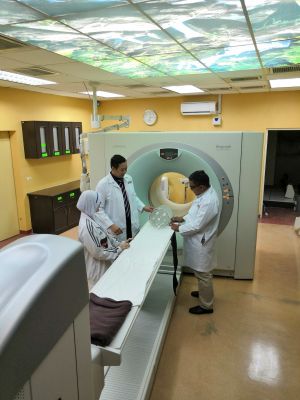
They conducted full body scans of 31 people with malignant tumours – including cancers of the lung, oesophagus, colon and breast – using a machine that combines positron emission and computed tomography (PET/CT). The scans evaluated tumour malignancy and aggressiveness based on a measurement, called the maximum standardized uptake value (SUVmax). The more a particular radiopharmaceutical tracer is trapped in the cell, the darker it appears on the scan images and the higher the SUVmax. Traditionally, tumours with a SUVmax value of 2.5 grams/millilitre or higher are considered malignant. The group was divided into two based on tumour SUVmax values above or below 6.0.
The team also measured patients’ body mass index (BMI), a measure of obesity; fasting blood sugar levels; and blood levels of inflammatory markers including C-reactive protein, a substance produced by the liver in response to inflammation, and interleukin 6, an immune protein that is active during inflammation.
They found strong correlations between SUVmax and C-reactive protein levels. They also found strong correlations between C-reactive protein levels and interleukin 6 levels. Finally there were also strong correlations between interleukin 6 levels, BMI, and fasting blood glucose levels.
They found that fasting blood glucose and interleukin 6 levels in particular were good predictors of tumour aggression. The fasting blood glucose levels rose and the interleukin 6 levels dropped incrementally the higher the tumour SUVmax value was above 6.0. This could mean that rising blood sugar levels in people with tumours having SUVmax values above 6.0 indicates they are becoming increasingly aggressive. Falling interleukin 6 levels in high SUVmax tumours, on the other hand, could indicate effective treatment.
“Serum inflammatory markers and endogenous glucose are associated with a potentially more aggressive malignant cancer,” the researchers conclude in their study published in the Pertanika Journal of Science & Technology. “In particular, interleukin 6 may be used as a useful surrogate marker for tumour aggressiveness with an important prognostic value,” they write.
Further research, however, is needed to understand why interleukin 6 levels are altered in this way.
Paper Reference: Ahmad Saad, F. F. et al, “The Association of FDG-PET (Suvmax) and Inflammatory Marker in Predicting Tumour Aggressiveness” Pertanika Journal of Science & Technology. 2018
https://bit.ly/2zuNdOF
Distributed for Pertanika Journal of Science & Technology by ResearchSEA.