


Compounds in an Asian fermented fish paste could help reduce high cholesterol.
Selangor, Malaysia — Compounds in a fermented fish paste used as a condiment in Indonesia efficiently inhibit an enzyme involved in cholesterol synthesis, reports a study published in the Pertanika journal Tropical Agricultural Science.
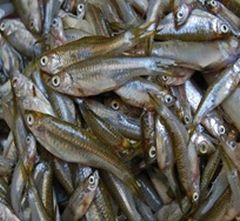
Researchers from Sriwijaya University in Indonesia tested the effects of various peptides filtered out of bekasam, a fermented fish paste used in Indonesian cooking, on the enzyme HMG-CoA reductase. They found two peptides inhibited the enzyme.
HMG-CoA reductase catalyzes the conversion of HMG-CoA to mevalonic acid, a necessary step in cholesterol synthesis in the body. Previous studies have reported that some fermented fish products can block this enzyme’s activity.
The team prepared bekasam from carp fish that was gutted, washed and soaked in a culture of the bacterium Lactobacillus acidophilus for 30 minutes. The fish were then removed from the culture, mixed with salt and rice, and fermented for seven days. An extract was derived from the resulting bekasam by mixing it with distilled water, centrifuging it, and then filtering it through a tiny membrane. The filtrates were separated according to their molecular size.
A bioactive compound known as lovastatin, found in high concentrations in the extract, successfully inhibited HMG-CoA reductase in an experiment designed to test the enzyme’s activity. Another peptide with a larger molecular weight was also found to inhibit HMG-CoA reductase with high efficiency.
During the fermentation process, bacteria help break down proteins into peptides and amino acids. “The use of Lactobacillus acidophilus as a starter culture in the fermentation of bekasam increases the bioactive compounds of HMG-CoA reductase inhibitors,” write the researchers in their study.
The team next plans to develop a cholesterol-lowering supplement from bekasam, says Rinto of Sriwijaya University’s fisheries technology program, who co-authored the study.
For more information about this research, please contact:
Dr. Rinto
Department of Fisheries Product Technology
Faculty of Agricultural Sriwijaya University
Indralaya, 30862 South Sumatera, Indonesia
30862 South Sumatera, Indonesia
Email: rinto.unsri@gmail.com
Phone: +62711580934
About Pertanika Journal of Tropical Agricultural Science (JTAS)
Pertanika Journal of Tropical Agricultural Science (JTAS) is published by Universiti Putra Malaysia in English and is open to authors around the world regardless of nationality. Beginning 2012, it would be published four times a year in February, May, August and November. Other Pertanika series include Pertanika Journal of Science & Technology (JST), and Pertanika Journal of Social Sciences & Humanities (JSSH).
JTAS aims to provide a forum for high quality research related to tropical agricultural research. Areas relevant to the scope of the journal include: agricultural biotechnology, biochemistry, biology, ecology, fisheries, forestry, food sciences, entomology, genetics, microbiology, pathology and management, physiology, plant and animal sciences, production of plants and animals of economic importance, and veterinary medicine. The journal publishes original academic articles dealing with research on issues of worldwide relevance.
Website: http://www.pertanika.upm.edu.my/
The paper is available from this link: http://bit.ly/2wULoJQ
For more information about the journal, contact:
The Chief Executive Editor (UPM Journals)
Head, Journal Division, UPM Press
Office of the Deputy Vice Chancellor (R&I)
IDEA Tower 2, UPM-MDTC Technology Centre
Universiti Putra Malaysia
43400 Serdang, Selangor
Malaysia.
Phone: +603 8947 1622 | +6016 217 4050
Email: nayan@upm.my
Press release distributed by ResearchSEA for Pertanika Journal.
Sept 11, 2017 19:00 HKT/SGT
Topic: Research and development
Sectors: Environment, HealthCare
http://www.acnnewswire.com
From the Asia Corporate News Network
Copyright © 2017 ACN Newswire. All rights reserved. A division of Asia Corporate News Network.